
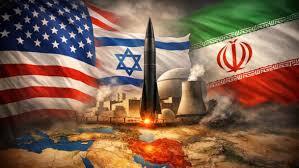
London, May 11, 2026 – Oil surged after US President Donald Trump rejected Iran’s latest response to his proposal to end the war in the Middle East, prolonging the effective closure of the crucial Strait of Hormuz.
Brent crude futures advanced as much as 4.6% to $105.99 a barrel, while West Texas Intermediate traded near $100. In a social media post, Trump said the response was “TOTALLY UNACCEPTABLE” as the two sides struggle to maintain a fragile ceasefire following a series of flareups in hostilities.
The near-closure of Hormuz since the start of the war at the end of February has choked off supplies of crude, natural gas and fuels to global customers, driving up energy prices and raising inflation fears. The International Energy Agency says the conflict is causing the biggest supply shock in history.
“Optimism over an imminent deal between the US and Iran has faded, pushing crude higher,” said Warren Patterson, head of commodities strategy for ING Groep NV in Singapore. “Fears will likely grow over the potential for re-escalation once again, leaving further upside to prices.”
Tehran offered to transfer some of its stockpile of highly enriched uranium to a third country, but rejected the idea of dismantling its nuclear facilities, the Wall Street Journal reported. Iran disputed the report, according to the nation’s semi-official news agency Tasnim.
A drone strike on Sunday that briefly set a cargo vessel ablaze off Qatar in the Persian Gulf marked the latest shipping attack in the region since the ceasefire began in early April. The United Arab Emirates and Kuwait said they had intercepted hostile drones.
The market will only normalize in 2027 should shipping through Hormuz remain curtailed for more than a few weeks from now, Saudi Aramco Chief Executive Officer Amin Nasser said on Sunday. The company has redirected some oil flows through its Yanbu port on the west coast to offset lost supplies.
There has been a trickle of supply that has made it through the strait, with the UAE and Saudi Arabia successfully sneaking several tankers out, but total flows remain just a fraction of what they were before the war. Qatar also managed to get a liquefied natural gas shipment out, its first since the conflict began.
Wall Street is growing increasingly convinced that shipping via the Strait of Hormuz will remain impaired into the second half of the year. A majority of respondents to a Goldman Sachs Group Inc. survey expected flows through the narrow waterway to be disrupted beyond the end of June.
In an interview on CBS’s 60 Minutes on Sunday, Israeli Prime Minister Benjamin Netanyahu warned that the war with Iran is “not over.” He said there is more work needed to dismantle the country’s nuclear capability and to remove its stockpile of highly enriched uranium.
Trump is scheduled to meet President Xi Jinping this week, and US officials said Sunday that he is expected to press the Chinese leader over the Asian nation’s approach to Iran. Revenue that China provides to Iran as well as potential weapons exports would be among topics discussed.
The global benchmark’s prompt spread widened, with the gap above $4 a barrel in backwardation, a bullish structure pointing to tight supply.
Trump is giving diplomacy “every chance we possibly can before going back to hostilities,” the U.S. ambassador to the United Nations, Mike Waltz, told ABC earlier.
Iran’s new supreme leader, Mojtaba Khamenei, who has not been seen or heard publicly since the war began, “issued new and decisive directives for the continuation of operations and the powerful confrontation with the enemies” while meeting with the head of the joint military command, the state broadcaster reported, with no details.
Drone attacks target Gulf Arab nations
The fragile ceasefire was tested when a drone ignited a small fire on a ship off Qatar and the United Arab Emirates and Kuwait reported drones entering their airspace. The UAE said it shot down two drones and blamed Iran. No casualties were reported, and no one immediately claimed responsibility.
Qatar’s Foreign Ministry called the ship attack a “dangerous and unacceptable escalation that threatens the security and safety of maritime trade routes and vital supplies in the region.” The United Kingdom Maritime Trade Operations Center gave no details about the ship’s owner or origin.
Kuwait Defense Ministry spokesperson Brig. Gen. Saud Abdulaziz Al Otaibi said forces responded to drones but did not say where they came from.
Iran and armed allied groups such as the Lebanese militant Heezbollah group have used drones to carry out hundreds of strikes since the war began with U.S. and Israeli attacks on Feb. 28.
Iran says it’s on ‘full readiness’ to protect nuclear sites
Trump has reiterated threats to resume full-scale bombing if Iran does not accept an agreement to reopen the strait and roll back its nuclear program. Iran has largely blocked the strategic waterway that’s key to the global flow of oil, natural gas and fertilizer since the war began, rattling world markets.
The U.S. military in turn has blockaded Iranian ports since April 13, saying it has turned back 61 commercial vessels and disabled four. On Friday, it struck two Iranian oil tankers it said were trying to breach the blockade.
Iran’s Revolutionary Guard navy says any attack on Iranian oil tankers or commercial vessels would be met with a “heavy assault” on U.S. bases in the region and enemy ships. (Bloomberg)