
Abuja, May 8, 2025 – The federal government has signed a $158.15 million financing agreement for the Value Chain Programme in Northern Nigeria (VCN) to revolutionise the nation’s agriculture sector.
The implementation of the project is to begin immediately to support agriculture value chain development in nine states in the North with the signing of the agreement.
The project support value addition for farmers
The initiative is co-funded by the International Fund for Agricultural Development (IFAD), the French Development Agency (AFD) and the Government of Nigeria.
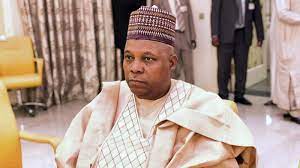
Vice-President Kashim Shettima, who spoke during the signing of the agreement in Abuja, described the initiative as a product of critical thinking about the economic reality of the northern region.
He also described the project as a fulfilment of the promise made by President Bola Tinubu’s administration to reduce poverty in Nigeria, restore dignity to the nation’s farmers, and ensure food security.
“It is a declaration of faith in the North—not as a region of deficits, but as a place of abundance.
“It also invites us to play our part in fulfilling the promise to reduce poverty, nourish our people, and restore dignity to farming families across Bauchi, Borno, Jigawa, Katsina, Kebbi, Sokoto, Kano, Yobe, and Zamfara.
“What has brought us together today is an investment of 158.15 million dollars, co-financed by the International Fund for Agricultural Development (IFAD), the Agence Française de Développement (AFD), the Federal Government of Nigeria, and other stakeholders.
“This reflects President Bola Ahmed Tinubu’s commitment to prioritising what matters most—people, productivity, and prosperity.”
Shettima recalled that the Tinubu administration recently commenced foundation laying for the construction of Special Agro-Industrial Processing Zones (SAPZs) across Nigeria.
He said the VCN programme would feed into the SAPZs, serving as “a steady pipeline of raw materials and ensuring our processors no longer grope for quality inputs.
“This synergy will shift us from exporting raw produce to exporting value-added goods—creating jobs, wealth, and industrial stability,” he added.
Shettima said that the recent global trade disruptions and the resurgence of protectionism are loud warnings to Nigeria to begin to grow what its people eat and produce what they trade.
“The agricultural tariffs and retaliatory postures of global powers like the U.S. and China have rattled commodity chains.
“For a nation that has long relied on food imports, the message is clear: we must grow what we eat and produce what we trade. The VCN answers this call.
“By making wheat, maize, and animal feed viable for commercial cultivation, and by investing in irrigation, processing, and storage facilities in states like Kebbi and Jigawa.
“We are not just securing food—we are laying the groundwork for agricultural exports that can rival our oil. What makes this programme exceptional is that it targets the underserved: women, youth, persons with disabilities, and returnees.
“It recognises that peace and prosperity are twin goals—and that in communities scarred by conflict, agriculture is not just a livelihood; it is rehabilitation.”
Shettima said the federal government would deploy digital tools to track every step from farmer registration to market access and input distribution to yield analysis.
He assured that in regions where migration and insecurity are fuelled by joblessness, the VCN provides vehicles for enterprise, income, and dignity.
Earlier, Ahmed Lawan, a former Senate President, commended IFAD, the federal government and other partners for the conception of the programme.
He described the programme as a well-thoughtout initiative that will transform the lives and livelihoods of many in the target states and beyond.
He pledged the commitment and support of the National Assembly in the implementation of the various interventions contained in the programme.
Abubakar Kyari, the Minister of Agriculture and Food Security, said the signing of the financing agreement represented a significant milestone in the efforts to transform the agricultural landscape in Nigeria.
He said the participation of the nine states and the presence of other critical stakeholders underscore the commitment of the sub-nationals and the federal government in fostering inclusivity in agricultural development.
The minister expressed confidence that the VCN will deliver programmes and projects that will improve agricultural productivity and the overall well-being of small-holder farmers, farmer groups, and women across the region.
Gov. Dikko Radda of Katsina applauded the leadership provided by President Tinubu and Vice President Shettima for the implementation of the VCN programme and other schemes across northern Nigeria.
Gov. Umar Namadi of Jigawa pledged commitment and support in the actualisation of the objectives of the various components of the programme.
He urged the implementers to review the design and timeline for implementation to enable states to maximize the benefits therein.
Dede Ekoue, the Country Director of IFAD, described the programme as a $158.15 million-dollar project designed to transform agribusiness in nine northern states.
She said interventions would focus on climate smart agriculture, leveraging innovative technologies, improving post-harvest handling and value chain addition.
The IFAD Director said the project would create over 30,000 jobs and entrepreneurial opportunities for youths, women and vulnerable groups.