Paul Ejime
Abuja, June 3, 2025 – The Economic Community of West African States (ECOWAS) marked the fiftieth anniversary of its establishment last month.
Amidst the celebratory activities, like ‘a thief in the night’ (not related to the Bible or the popular song), Togolese leader Faure Gnassingbé, on Saturday, May 3, 2025, completed a controversial constitutional reform which opponents and analysts see as the fulfilment of his life ambition for perpetuating himself in power and prolonging the Gnassingbé Eyadema dynasty.
Faure will be 59 years old on June 6, 2025. He first seized power with the support of Togo’s military in 2005 following the death of his father, President Gnassingbé Eyadéma, who ruled Togo with an iron fist for 38 years.
The younger Gnassingbé has ruled Togo as President of the Republic through several flawed elections, including those denounced by civil society organizations and boycotted by the opposition.
On May 3, 2025, he took the title of President of the Council of Ministers, the country’s highest executive office, with no term limits.
To avoid any backlash, Faure Gnassingbé’s investiture for his new role was low-key, cementing a seemingly innocuous but momentous shift with far-reaching implications on the Togo polity, from a presidential to a parliamentary system, through the controversial constitutional reform.
Under the reform, Gnassingbe’s original role of President of the Republic has become a ceremonial post, replaced by the President of the Council of Ministers, with sweeping executive powers.
To pave the way for his self-perpetuating agenda, Gnassingbe’s ruling Union for the Republic party (UNIR) won 108 of the 113 parliamentary seats in the country’s National Assembly last year.
The UNIR also gained 34 out of 41 Senate seats, after the main opposition parties boycotted the elections, which they dismissed as a sham. Foreign reporters were not accredited to cover the elections.
According to legal and Constitutional experts, Togo’s constitutional changes, less than six months before parliamentary elections, are in violation of the 2001 ECOWAS Supplementary Protocol on Democracy and Good Governance. Section II, Article 2.1 of the Protocol states: “No substantial modification shall be made to the electoral laws in the last six (6) months before the elections, except with the consent of a majority of political actors,” while Article 2.2 requires “All the elections shall be organized on the dates or at periods fixed by the Constitution or the electoral laws.”
Togo’s controversial constitutional changes were adopted in March 2025 and parliamentary elections held in April.
Surprisingly, ECOWAS did not publicly challenge the move; instead, the last summit of regional leaders named Faure Gnassingbe’s as one of the mediators assigned to work for the return of the three Alliance of Sahe (AES) countries (Burkina Faso, Mali, Niger) that broke away from ECOWAS.
The mediation is at best, faltering.
Ironically, Togo’s Foreign Affairs Minister Robert Dussey, on March 11, 2025, also announced that his country could join the AES countries.
That statement has not been refuted with critics questioning Togo’s fidelity and sincere commitment to the ECOWAS regional integration agenda.
Nigerian former Head of State General Yakubu Gowon, the only surviving ECOWAS founding father, and Togo’s late President Gnassingbé Eyadéma played a pivotal role in the birthing of ECOWAS through the May 28, 1975 Treaty of Lagos.
To confer a semblance of inclusiveness in the Faure Gnassingbé government reform, Jean-Lucien Savi de Tové, 86, a former Minister of Trade (2007-2009) and an opposition figure, was sworn in as Togo’s new President of the Republic, which under the new constitution is largely a ceremonial position, without any executive powers.
Critics and keen watchers of politics in Togo are in no doubt that the controversial constitutional reform was designed by Gnassingbé to extend his grip on power indefinitely, especially when his final presidential term under the old constitution approached its end in 2025.
Human rights, the media and opposition voices are stifled in Togo. Public protests are officially banned or met with government repression.
Professor Aimé Gogué, leader of the opposition Alliance for Democracy and Integral Development (ADDI), accused Faure Gnassingbé of pushing the constitutional changes to enable him to “rule for decades, unchallenged.”
Now that Gnassingbé has apparently realized his long-term political ambition, what are the guarantees for democratic accountability, institutional legitimacy, or the future of opposition politics in Togo?
How can ECOWAS and the African Union respond?
Critics consider the Gnassingbé government’s actions as “constitutional/institutional and electoral coups.”
Will the “civilian coups” go unchallenged or without consequences, and how would ECOWAS muster the moral authority to stop other countries that might follow the Togo example?
ECOWAS has recorded notable achievements. However, the 15-nation regional economic bloc and several Member States are facing serious leadership challenges including the developments in Togo.
In the five decades of its existence, ECOWAS’ achievements include the region’s flagship free movement of persons, goods and services and the Community citizens’ right to residence and establishment through the 1979 Protocol.
The implementation of this lofty protocol, which allows citizens to stay in a country other than their own for an initial 90 days without a visa, requires improvement, yet, it is instructive that several African countries and/or regions have followed the ECOWAS example.
There is also the ECOWAS Trade Liberalization Scheme (ETLS), which went into operation in 1990, whose benefits are expected to be enhanced through the implementation of the African Continental Free Trade Area (AfCFTA) through ongoing activities of the ECOWAS Vision 2050. Given the importance of agriculture to the West African economy, the ECOWAS Agricultural Policy (ECOWAP), adopted in 2005 defines the principles and objectives in the agricultural sector, and the orientation of agricultural development in the region.
The ECOWAS Centre for Renewable Energy and Energy Efficiency (ECREEE) is dedicated to advancing sustainable energy in West Africa and beyond, just as the ECOWAS Regional Electricity Regulatory Authority (ERERA) handles electricity supplies, while the West African Gas Pipeline (WAGP) is designed to boost gas distribution in the region.
The ECOWAS Bank for Investment and Development (EBID) has grown into a full-fledged development finance institution (DFI) supporting Member States over the years, while the West African Health Organization (WAHO) coordinates health issues in the region.
The ECOWAS Commission also coordinates the regional gender policy and mainstreaming with the ECOWAS Gender Development Centre (EGDC).
There are also the ECOWAS integrated Maritime strategy and the Infrastructure, Energy and Digitization programme, with a 25-Year (2020-2045) Regional Infrastructure Development Plan, to facilitate integrated infrastructure project delivery, covering Trade, Telecommunication and Information Technology, Energy and Mines, and water resources.
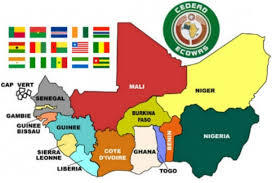
The ‘Praia-Dakar-Abidjan Multi-modal Corridor’ is one of the key regional road networks’ development projects. This 3,164-km highway project, with 600-km of maritime connection, links eight ECOWAS Member States – Cabo Verde, Senegal, The Gambia, Guinea, Guinea Bissau, Sierra Leone, Liberia and Côte d’Ivoire.
The highway also connects the five other Member States along the Abidjan-Lagos Corridor – Ghana, Togo, Benin and Nigeria.
The ECOWAS Youth and Sports Development Centre (ECOWAS/YSDC) develops and implements programmes on youth and sports development and capacity-building to fully harness youth potential in the region.
Similarly, the ECOWAS Community Court of Justice, one of the creations under the 1993 Revised Treaty, is seen as the citizens’ last hope for justice, having handed some landmark judgement/decisions in defence of citizen’s human rights against delinquent member States.
Also, in the area of electoral assistance to Member States and support for credible elections, the ECOWAS Network of Electoral Commissions (ECONEC), established in 2008, has made a difference in capacity building, experience-sharing and peer learning to improve the quality of elections conducted by Election Management Bodies (EMBs) in the region.
In the domain of peace and security, ECOWAS has shone among Africa’s eight Regional Economic Communities (RECs), through various interventions that ended the civil wars in Liberia and Sierra Leone and political crises in other Member States such as Cote d’Ivoire, Guinea Bissau, Niger, Mali and the Gambia, using the regional instruments on conflict prevention, management and resolution.
Ironically, it is on peace and security and political governance that ECOWAS now faces serious existential challenges. Until 2020, all the 15 ECOWAS Member States practised multi-party democratic systems, no matter how imperfect. But today, four Member States – Mali, Guinea, Burkina Faso and Niger – are ruled by the military, which toppled elected civilian governments.
The junta leaders in Mali, Burkina Faso and Niger have effectively pulled their countries out of ECOWAS after forming the Alliance of Sahel States, AES.
By August this year, the junta leader in Mali, Assimi Goita, a former army Colonel who self-promoted himself to a General, would have been five years in power, and recently announced plans to rule for an additional five years unelected. In March this year, the junta leader in Niger, Abdourahamane Tchiani, who seized power in 2023, was sworn in as president for a five-year transition period after taking the military top rank of General.
His colleague in Guinea, Mamady Doumbouya, another army colonel, who seized power in 2021 and elevated himself to General and President, also eyes a long transition period.
Their colleague in Burkina Faso, Capt. Ibrahim Traore has not made public his political transition programme, since ousting Col. Paul-Henri Sandaogo Damiba in a September 2022 coup. Damiba had himself overthrown elected President Roch Kaboré in January that year.
Apart from the four countries under military dictatorships, and Togo, which has controversially transformed from a Parliamentary to a Presidential system, with the attendant tenure elongation baggage, there are also other ECOWAS Member States considered political hot spots of concern.
Sierra Leone is still battling the fallout from its disputed 2023 elections, and President Adama Barrow of the Gambia appears laser-focused on re-election in 2026, rather than governance or the ratification of a new constitution to end lingering problems from former President Yahya Jammeh’s 22-year dictatorship, which ended in 2017, with his exile to Equatorial Guinea.
Cote d’Ivoire’s President Alassane Ouattara, who is 83 years old, plans another election this year, for what critics consider his fourth term in office since 2011.
There is also Guinea-Bissau, whose President Umaru Embalo, recently threatened to expel an ECOWAS/UN mission from his country, having suspended the national constitution and dissolved parliament, leaving the judiciary and the Election Commission dysfunctional.
Meanwhile, ECOWAS and the Sahel regions continue to endure perennial instability, characterized by terrorism, violent extremism and separatist armed insurrections, with a high rate of unemployment, especially among the teeming young population amid general economic hardships.
The prognosis might look grim, with the rest of the World seized with various domestic concerns.
However, with proper diagnosis, Africans are those who can/will save Africa from self-inflicted and externally engineered problems.
Citizens’ active participation/involvement and demand for accountability from civilian and military rulers will free the restive, otherwise rich but impoverished and badly managed continent from bad governance.
Paul Ejime is a Media/Communications Specialist and Global Affairs Analyst,