Story by Alexandra Wexle
There is a surprise winner from the Iran war: Africa’s richest man.
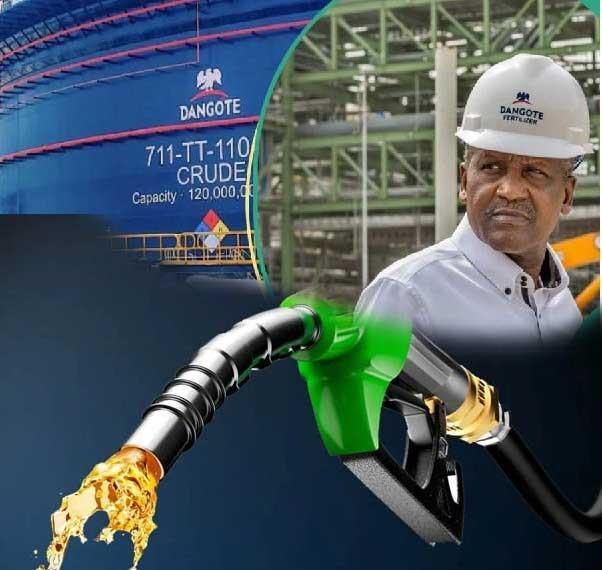
Nigerian industrialist Aliko Dangote went through hell building a $29 billion oil refinery that was plagued by a decade of delays and cost overruns that doubled the tab for the project.
Now, the commodities tycoon is reaping the benefits. The huge refinery reached full capacity in February—just in time to supply the world with diesel, jet fuel and gasoline that doesn’t need to pass through the Strait of Hormuz.
Surging demand for refined petroleum products has boosted Dangote’s wealth by some $4.86 billion since the start of the year, according to the Bloomberg Billionaires Index, bringing his net worth to around $34.8 billion. Dangote’s repeated bets on the rise of Africa’s middle class, from cement to sugar to salt, have helped the 69-year-old become the world’s 65th-wealthiest person.
The refinery’s output of gasoline, diesel and jet fuel have all risen more than 70% so far this year.
“Dangote is a big winner of the Middle East conflict,” said David Omojomolo, Africa economist at Capital Economics. “It’s just really great timing that it’s up and running now.”
To further cash in, Dangote plans to take the refinery public on the Nigerian Stock Exchange later this year, seeking a valuation of at least $50 billion, and eventually pursue a secondary listing—most likely in New York—according to Devakumar V.G. Edwin, group vice president at Dangote Industries.
Dangote is also set to invest an additional $28 billion or so in expanding the refinery outside of Lagos, and building another facility in Kenya, Edwin said.
The moves show how the huge energy shock stemming from the Iran war is benefiting suppliers unaffected by the disruption in the Middle East. Rising demand for Nigeria’s crude and refined products has boosted the country’s wider economy, supporting its currency and limiting rising gasoline prices.
The conflict has been a particular boon for Dangote, whose refinery is by far the largest in Africa.
The billionaire built the sprawling facility to address an issue that has long vexed Nigeria—the West African nation is a major oil producer but exports almost all its crude to be refined abroad. It means that despite its rich natural resources, the country is reliant on costly fuel imports.
To fix that, Dangote returned to the playbook that earned him his fortune. He was Nigeria’s largest sugar importer before he went into manufacturing in the 1990s, turning the country into an exporter. He then repeated the feat with cement.
The Dangote Petroleum Refinery began producing in 2024, and the business has now been turbocharged by the war.
Demand for its products has surged from across sub-Saharan Africa this year, while jet fuel exports to Europe have increased, Edwin said.
The Dangote refinery has been the world’s largest exporter of jet fuel since April, according to S&P Global Energy Commodities at Sea, supported by higher production runs at the facility.
To meet booming demand, Dangote now plans to double the refinery’s capacity to 1.4 million barrels a day by 2028, an expansion that Edwin expects to cost about $13 billion.
Dangote is also working on building another refinery in Lamu, a pristine archipelago off the coast of Kenya.
The Lamu project, which includes the construction of a port, is expected to take about three years and cost about $15 billion, Edwin said. The company already has selected a site and is ready to start design work, he added.
One major challenge for Dangote is securing enough local oil to feed the huge refinery. So far, Nigeria’s state oil company, NNPC, hasn’t been able to deliver even close to what Dangote requires. That is because the government needs to sell crude to overseas buyers to service oil-backed loans and fulfill long-term export contracts.
Nigeria has been pushing to increase its oil output to feed more domestic crude into Dangote’s refinery, but so far progress has been slow.
Domestic oil production needs to increase for Dangote’s expansion to truly bear fruit, said Brendon Verster, senior economist at Oxford Economics Africa, “otherwise, the behemoth facility would need to rely on oil imports.”
Another challenge for Dangote is cultivating more customers. To that end, the company plans to buy its own ships to cut transport costs, set up a distribution hub in Namibia to better supply southern Africa and build a 1,500-mile-plus pipeline to pump its products to landlocked countries such as Zimbabwe, Botswana and Zambia.
“With this huge volume, the challenge will be distribution,” Edwin said. (WSI)