Lagos, May 15, 2025 – Nigeria received over $8 billion in Foreign Direct Investments (FDI) in deepwater and gas projects in 2024
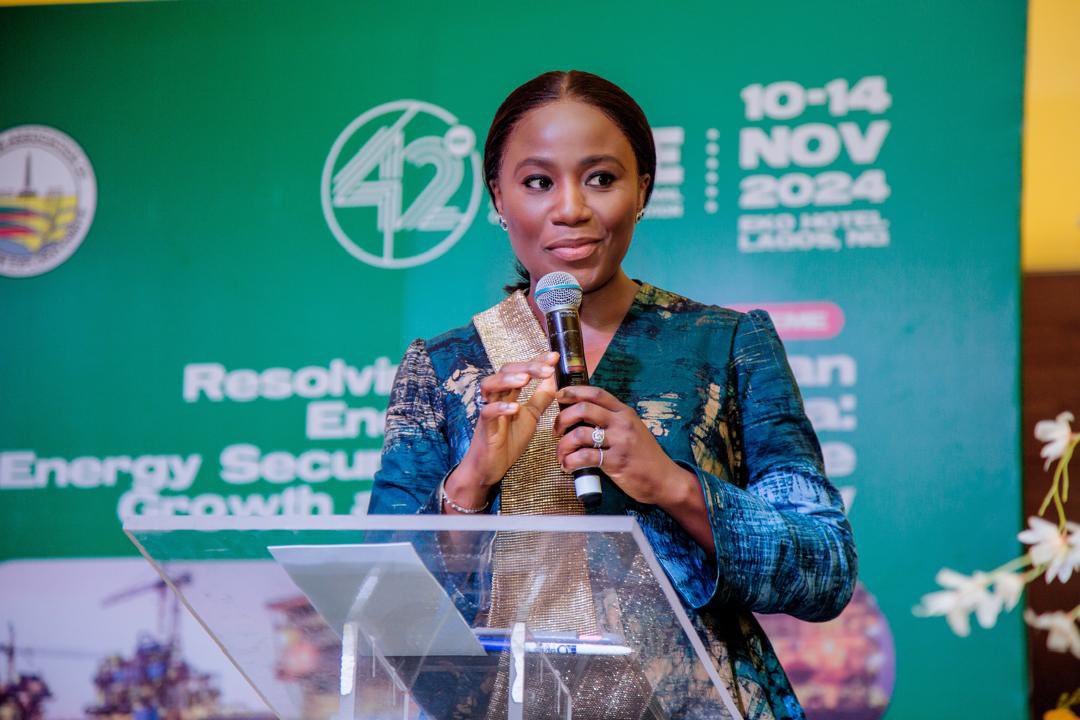
Olu Verheijen, the Special Adviser to the President on Energy, disclosed this at the just concluded 2025 Africa CEO Forum held in Abidjan, Côte d’Ivoire.
She said the amount represented an increase over the $6.7bn earlier announced as investment in the energy sector in the year.
Verheijen attributed the current higher inflow of investments in the sector to some reforms of the federal government that had engendered better tax conditions, faster approval processes, clearer rules, and improvements in the power sector.
“In under a year, Nigeria unlocked over $8bn in deepwater and gas Final Investment Decisions through decisive presidential action, focused on improved fiscal terms, streamlined contracting timelines, greater clarity to local content rules, and power sector reforms enabling gas-to-power commercial viability. We moved from gridlock to greenlight, and investors responded,” she said.
Verheijen said Nigeria had secured other secured significant FDI inflow in the sector which indicated improved investor confidence due to the recent reforms.
The special adviser, however, decried the declining foreign investment inflow to Africa.
She said the continent attracted $340 billon in upstream capital between 2011 and 2015, far below the projected $130 billion between 2026 and 2030.
Verheijen advised African leaders to discard the age-old sentimental notion of “African capital” and embrace investment discipline grounded in commercial logic and global competitiveness.
She said deepwater and LNG projects operate in fiercely competitive global capital markets.
“To stay relevant, African nations must pursue strategic partnerships based not on dependency but on mutual interest and value,” she said.
The special adviser said global capital is increasingly attracted to jurisdictions offering strong project economics, low carbon intensity, and predictable regulatory environments, characteristics that have driven investment into the Permian Basin, Guyana, and Brazil.
“If Africa wants a meaningful slice of the $500bn spent annually on upstream globally, we must offer clarity and competitiveness,” she said.
Verheijen said capital is neither African nor foreign, but rational.
“Let’s be clear: capital has no passport. Sentimental appeals to ‘African capital’ are a distraction,” she said. “Capital is opportunistic, not patriotic. It flows where risk-adjusted returns are competitive,” she said.