
Washington, April 25, 2025 – The International Monetary Fund (IMF) has advised Nigeria and other African economies to make efforts to boost their revenue from taxation in spite of prevailing fiscal pressures.
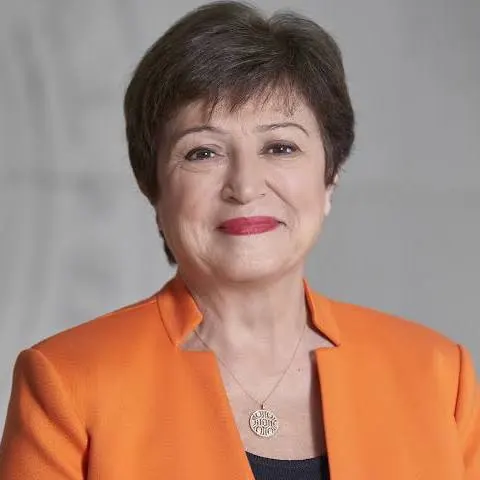
Kristalina Georgieva, the IMF Managing Director, gave the advice on Thursday while speaking at a press briefing on the IMF’s 2025 Global Policy Agenda.
She urged African countries to move beyond hesitation and take decisive steps toward broadening their tax base and tackling evasion, citing Nigeria, Egypt, Ghana, and Côte d’Ivoire.
“Don’t use any excuses around, ‘Oh, it’s difficult. We can’t really go for more tax,’ because yes, you can. There is a lot that can be done to broaden the tax base and reduce tax evasion and avoidance, especially through the use of technology,” she said.
Georgieva also called for other fiscal reforms that could help these countries to build buffers against external shocks, while ensuring that monetary policies tackle local inflation.
She noted the new global developments that had brought new waves of economic uncertainty and which could affect fragile and conflict-affected states like Nigeria.
“Oil producers like Nigeria are under budget pressure due to lower oil prices,” she noted.
“On the other hand, oil importers may benefit. But broadly, slowing global growth will affect everyone, and we have already downgraded the continent’s growth prospects.”
The IMF called for a two-pronged approach of fiscal reform to build economic buffers and targeted monetary policy responsive to local inflation dynamics.
“You cannot simply copy what the central bank governor in the neighbouring country is doing.
“You must assess your own inflationary pressures and respond accordingly,” she said.
Georgieva noted the reputational risks posed by corruption and conflict in some countries, stressing that the misdeeds of a few countries could cast a shadow over the entire continent.
she called for cleaner governance record and deeper regional trade integration.
Georgieva said Africa must accelerate infrastructure development and remove trade barriers to unlock its potential as an economic powerhouse.
“Africa has so much to offer the world, its minerals, its natural resources, and its young population. A more unified, more collaborative continent can go a long way,” she said.